
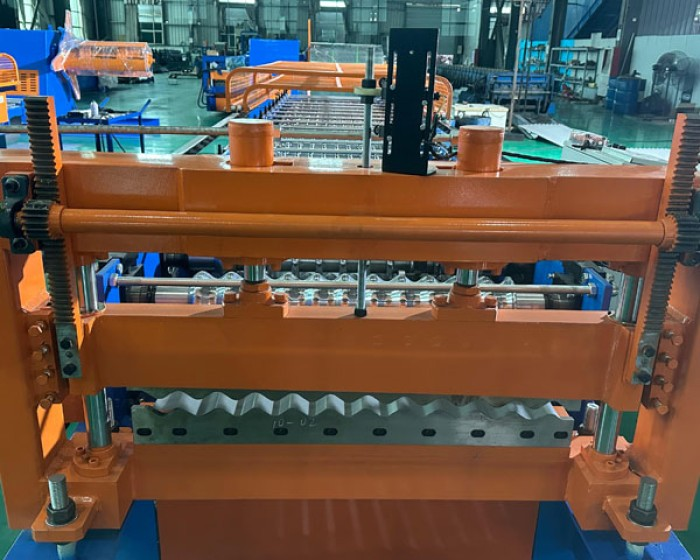
Modern construction projects demand building materials that offer strength, durability, efficiency, and long-term value. Steel frame systems have become a preferred choice for residential, commercial, and industrial buildings because they provide excellent structural performance while supporting faster construction. Compared with traditional building materials, steel framing delivers greater precision, reduced maintenance, and improved design flexibility. Advanced manufacturing equipment such as the double layer roll forming machine and floor deck roll forming machine helps produce high-quality steel components that support reliable and efficient building systems.
Why Steel Frame Systems Are Growing in Popularity
Steel frame systems are widely used because they combine high strength with relatively low weight. Precision-manufactured steel components fit together accurately, reducing installation time and improving overall construction quality.
As the demand for sustainable and cost-effective buildings increases, steel framing continues to play an important role in modern construction projects.
Advantages of Steel Frame Systems
High Structural Strength
Steel provides excellent load-bearing capacity, making it suitable for multi-story buildings, warehouses, factories, and commercial facilities. Its strength allows engineers to design durable structures with reliable long-term performance.
Faster Construction
Prefabricated steel components are manufactured with precise dimensions, allowing quicker assembly on-site. Faster construction helps reduce labor costs and shortens overall project timelines.
Excellent Dimensional Accuracy
Modern manufacturing technology ensures that steel framing components are produced with consistent dimensions, improving installation accuracy and reducing the need for on-site modifications.
Reduced Material Waste
Precision production minimizes unnecessary material loss during manufacturing. Efficient use of steel helps lower production costs while supporting environmentally responsible construction practices.
Long-Term Durability
Steel frame systems are resistant to warping, shrinking, and cracking, allowing buildings to maintain their structural integrity over many years with minimal maintenance.
Common Applications
Steel frame systems are widely used in residential housing, commercial buildings, industrial facilities, warehouses, office buildings, educational institutions, healthcare facilities, modular construction, and infrastructure projects. Their versatility allows architects and engineers to design buildings that meet a wide range of functional and structural requirements.
Benefits of Steel Frame Construction
- High structural strength
- Faster project completion
- Consistent product quality
- Reduced material waste
- Lower long-term maintenance
- Flexible building design
- Reliable long-term performance
Choosing High-Quality Steel Framing Equipment
Manufacturers should invest in machinery that provides accurate production, stable operation, and efficient automation. Equipment quality directly influences the precision and consistency of steel framing components, helping manufacturers meet industry standards and customer expectations.
Reliable production systems also improve manufacturing efficiency while supporting future business growth.
Conclusion
Steel frame systems have become an essential part of modern construction by providing strength, precision, durability, and faster project completion. Their ability to improve building performance while reducing construction time makes them an excellent solution for a wide variety of residential, commercial, and industrial applications.
Whether using a double layer roll forming machine for efficient panel production or a floor deck roll forming machine for manufacturing durable structural decking components, advanced roll forming technology enables manufacturers to produce high-quality steel products that support modern building projects and long-term construction success.