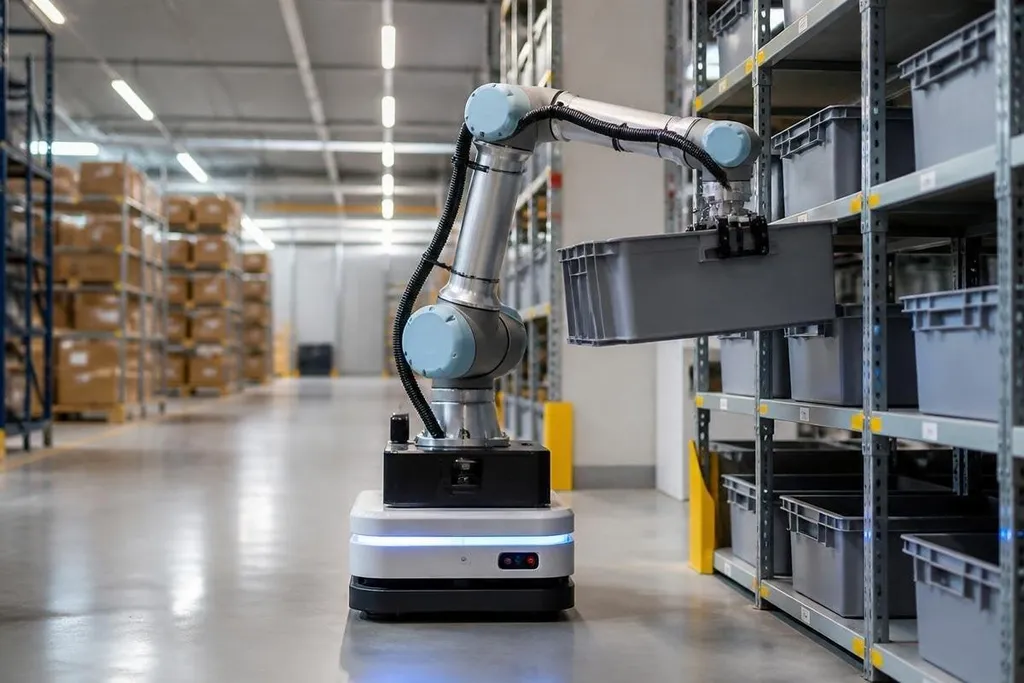
An e-commerce robot can move a tote from one shelf to another. AI helps it decide which tote to move, where to go, and what to do when the shelf looks different from the plan. That changes the robot from a fixed machine into a system that can respond to more conditions.
Quick read
- AI reads camera and sensor data so robots can identify items and obstacles.
- Software can change task order when orders, stock, or robot locations change.
- The hard work still includes safe movement, clean data, human checks, and careful setup.
What AI adds to the robot
Traditional warehouse automation follows set rules. A conveyor sends a box to a known point, or a robot follows a marked route. That works well when the layout and task stay stable. E-commerce rarely stays that tidy.
AI can process data from cameras, depth sensors, scanners, and the warehouse control system. A vision model may help a robot tell a shoe box from a soft package, while another system estimates where the object sits inside a storage bin.
The robot still needs a gripper, motors, sensors, and safety controls. AI does not replace those parts. The useful change is the link between seeing and acting.
If a package shifts, a robot can update its grasp point. If a route is blocked, the control system can assign another route or send the task to a different robot. Each decision needs limits, since a wrong grasp can damage an item or stop a work area.
How software changes warehouse work
Order handling creates a moving set of tasks. Stock arrives, orders enter the system, robots need charging, and people may work in the same aisles. AI can rank tasks from current warehouse data instead of relying on one fixed sequence.
That may reduce empty travel and shorten the time between picking and packing, but the result depends on the data and the control rules. A system trained on clear images may struggle with a crushed carton, a new product, or a shelf partly blocked by another item.
Language models can also give staff a simpler way to ask for information. A worker might ask which storage area holds an item or why a robot paused. The answer still needs to come from approved warehouse records. A fluent response is not proof that the system found the right answer.
An AI picking system can name the right shelf and still leave a robot waiting for a blocked aisle. Robot24.com e-commerce robotics reporting connects the software answer to the robot’s task and test result before the article turns to where these systems fail.
Where the limits show up
AI needs examples, sensor data, and feedback. Poor images, missing stock records, weak network links, or changing lighting can reduce the quality of its decisions. A warehouse also has to manage safety around people, pallets, forklifts, and moving robots.
Human checks remain useful for unusual items and failed picks. A person may need to remove a tangled product, inspect a damaged package, or approve a new task before the system repeats it. These cases matter because e-commerce orders contain many objects that do not behave like standard boxes.
Cost is another limit. The robot is only one part of the system. A company may also need cameras, network equipment, software integration, staff training, maintenance, and a way to measure errors. A small improvement in picking speed may not cover those costs if the robot needs frequent intervention.
A practical buying checklist
Before choosing an AI-enabled e-commerce robot, check:
- Task fit: Can it handle your products, package sizes, shelf heights, and grasp points?
- Failure handling: What does it do when an item is hidden, damaged, or placed in the wrong spot?
- System links: Can it exchange orders, stock data, and fault messages with your warehouse software?
- Human control: Can a worker pause the robot, take over a task, and review an error?
- Proof of value: Which measured result matters: fewer failed picks, less travel, faster packing, or lower labor time?
- Ongoing cost: What do sensors, software fees, repairs, training, and integration add to the purchase price?
I’d judge an e-commerce robot by its failure rate and recovery time before its AI label. A system that handles ordinary tasks well but needs a person for every unusual package may still fit a narrow use case. One that reports its limits clearly gives an operations team a better basis for planning.
The next useful test is simple: run the robot on the real product mix, record every failed pick and human handoff, then compare those results with the current process.